The guest data your reservation book is throwing away
Every booking is a fact about a guest. A paper book forgets it by morning. A profile keeps it for years.
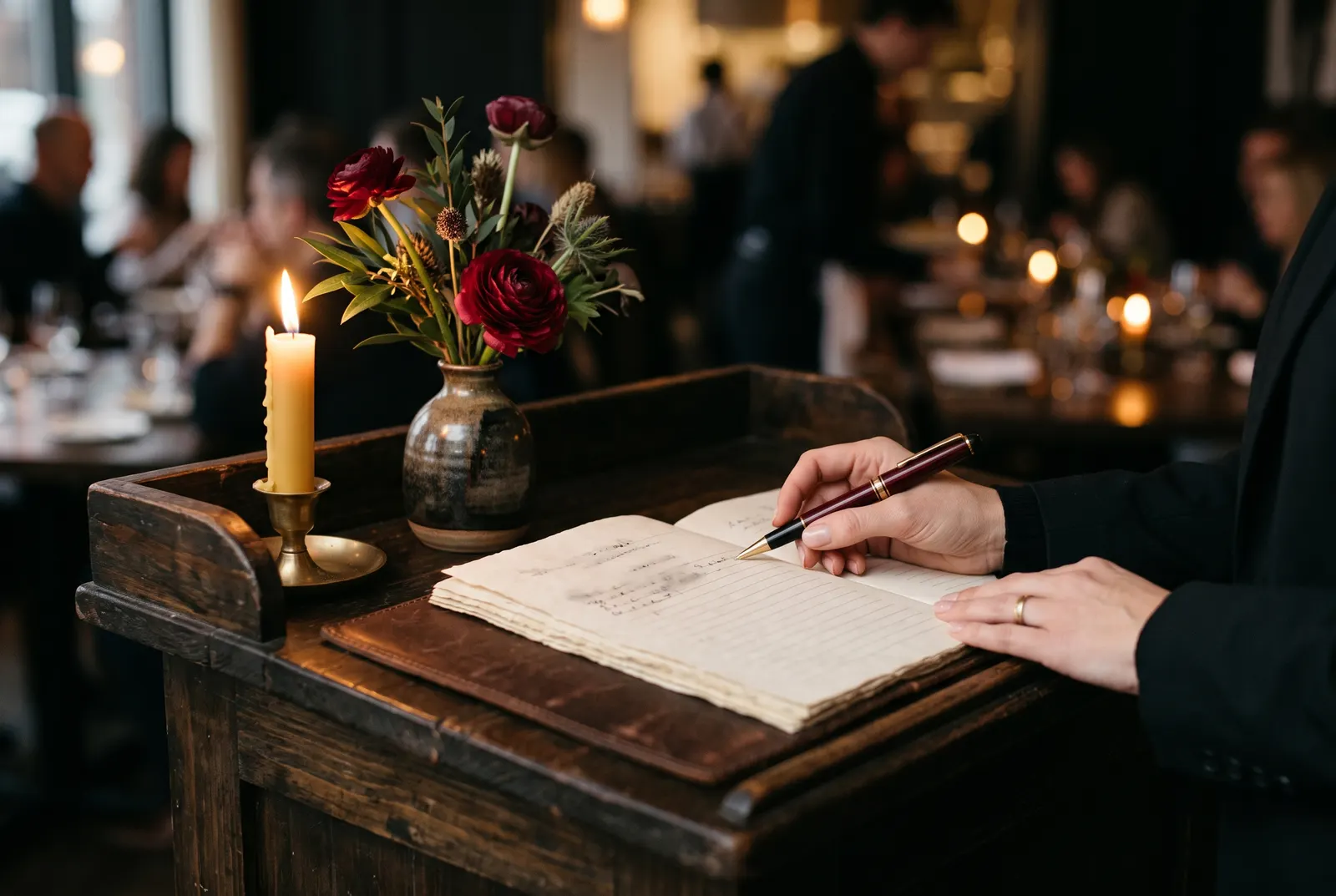
At the end of a busy Saturday the reservation book is a small archive. Names in three different hands. Times crossed out and moved. A circled “window?” next to a table for two, “nut allergy” squeezed into a margin, “birthday, 40” underlined twice. For one evening it was the most useful object in the building. A week later it is in a drawer, and everything it knew has gone with it.
Most restaurants do not think of this as losing data. It feels like closing the day. But each of those lines was a fact about a person who chose to spend an evening with you, and most of those facts will matter again.
What a booking already tells you
Nobody needs to run a survey. Ordinary bookings, collected over time, already hold most of what a good host would want to know:
- Who the guest is and how to reach them.
- Which language they booked in, usually the one they would like to be greeted in.
- Which nights and hours they choose, and how far ahead they plan.
- Where they like to sit, if they picked the table themselves.
- What they cannot eat, and what they were celebrating.
- Whether they came, and whether they came back.
One booking is a note. Ten bookings from the same person is a portrait: the couple who always come on the first warm evening, the guest who books the fireplace every winter, the family who need a high chair and a quiet corner. That picture is worth more than any campaign, because it describes people who have already said yes.
Where the data goes to die
There are three usual places, and every restaurant uses at least one of them.
The paper book forgets by design. It is organised by date, not by person, so nothing connects the guest from March with the same guest in October. Allergies get written down again on every visit, or not at all.
The host's memory is better, and wonderful while it lasts. Good hosts remember faces, names and tables for years. Then the host moves on, and the restaurant discovers that its relationship with half its regulars lived in one person's head.
The portal keeps everything, but it keeps it for itself. The booking lands on your floor, the guest's history stays in someone else's system, and the next time they look for dinner, it is the portal that knows them. You paid for the booking. The relationship went somewhere else.
Some restaurants notice the problem and start a spreadsheet beside the book. It works for a month. Then a Friday gets busy, the sheet falls a week behind, and nobody trusts it enough to use it. Anything that has to be copied by hand from one place to another eventually stops being copied.
Remembering without watching
Keeping guest data is only half the job. The other half is using it in a way that feels like hospitality. “Welcome back. The window again?” feels like being known. A host reciting what someone ordered last time feels like being watched. The line is not always sharp, but a few habits keep you on the right side of it.
Write down what will make the next visit better, and little else. Treat allergies as sacred: a guest with a serious allergy should never have to repeat it, and should never have to wonder whether it reached the kitchen. Write notes you would be comfortable with the guest reading over your shoulder. And be clear about who on your team can see and change what, because a note about a guest is still a note about a person.
Used well, it shows up only in small ways. The host who greets a returning guest by name. The window table already set for the couple who always ask for it. The kitchen told about the shellfish allergy before the guest sits down, not after they order. None of it is announced. The guest simply notices that the evening went well, again.
In Couvert the guest book builds itself as bookings arrive. Each guest has one profile with their visit history, notes and allergies, and it grows with every evening. Bookings come through your own site and your own domain, with no commission on any of them, so the relationship stays with the restaurant it belongs to. Every member of staff signs in as themselves, and the activity log shows who changed what.
The book on the host stand is a record of tonight. A guest book is a record of everyone who ever chose you. Only one of them should end up in a drawer.