Trilingual by default: serving Latvian, Russian and English guests
A guest greeted in their own language feels expected, and that tends to bring them back. Three languages, native to each restaurant.
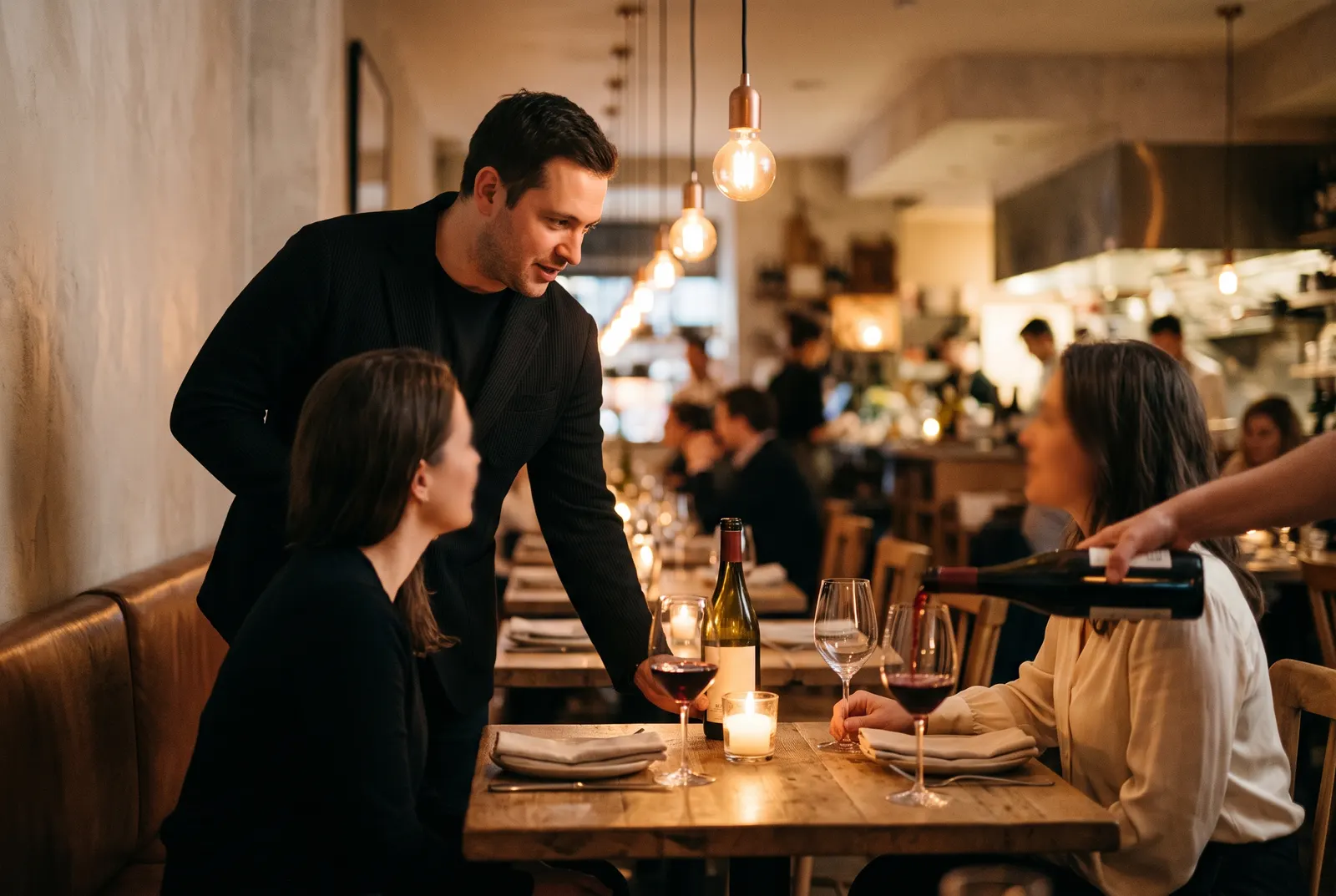
On any evening in Rīga, the room speaks several languages. A table of old friends in Latvian. A family celebrating in Russian. A couple in town for the weekend, reading the menu in English. None of this is unusual. It is the city.
Most restaurants handle it well in person. Staff switch languages without thinking, and a guest is answered in whatever language they chose. The trouble tends to start earlier, online, where the website and the booking were built in one language and the others were added later, in part, or not at all.
The first conversation happens on the page
Before a guest hears your host's voice, they read your site. That page is the first conversation, and for many guests it decides whether there will be a second. A booking form that changes language halfway through. A confirmation in a language the guest never picked. A menu run through a machine and never read by a person. Each of these says, quietly, that this guest was not the one you had in mind.
The guest rarely complains. They book somewhere that felt easier, or they phone, and the host takes the call in the middle of service. From the inside, gaps in language seldom look like a problem. They look like bookings that never happened.
It is worth remembering who reads which version. A Latvian guest may book in English because their phone is set to English. A Russian-speaking family may live three streets away and have eaten with you for years. A language is not a label for where someone comes from. It is simply the one they find easiest at the moment they decide where to eat, and the job is to offer it without making anyone ask.
What native means in practice
Three flags in the corner of a page are not the same as serving three audiences. Native means each language gets the care the first one got. For a restaurant, that comes down to a handful of things.
- Each language has its own address, so a Russian speaker can share a link that opens in Russian, and search engines can show each version to the right reader.
- The whole path is translated, from the first question to the last confirmation, with no stray English on the final step.
- Messages follow the guest. If they booked in Latvian, the text that confirms the table and offers a link to change it arrives in Latvian.
- The words are written by people who speak the language, down to the names of your rooms and your dishes.
- Nothing half translated reaches a guest. A missing string should stop the release rather than slip out on a Friday.
The last point sounds technical, and it is the one that most often goes wrong. Sites drift. A new dish, a notice about the terrace, a changed closing time, added in one language only because it was late and everyone was busy. Six months on, the English page says one thing and the Russian page another, and nobody on the team reads all three.
The team has a language too
Guests are only half of it. The people running the room need tools in the language they think in. A host scanning tonight's bookings at five to seven should not be translating the screen in their head. When the staff side speaks the team's language and the guest side speaks the guest's, each side reads naturally, and the booking passes between them intact: the name, the party, the table, the note about the allergy.
At FLO in Rīga, guests choose their table across the Red Room, the bar and the terrace on floresto.lv, and the hosts work from a panel that is in Latvian throughout. Each side of the booking meets it in the language that suits them.
A guest greeted in their own language feels expected, and a guest who feels expected tends to come back. Not every restaurant needs three languages. In Rīga, many premium rooms do, and guests can tell which ones mean it.
Couvert is built this way by default: Latvian, Russian and English, each with its own URL, confirmations sent in the guest's language, and a staff panel in Latvian. The build fails if an untranslated string would reach the site or the panel. It is a strict rule, and the right one. A guest should never be the first to find the missing word.